
DIY hair masks for natural and curly hair are homemade conditioning treatments made with ingredients such as avocado, banana, yogurt, honey, aloe vera and coconut milk. Depending on the recipe, they can help soften dry hair, improve slip, reduce roughness and make curls easier to detangle and style. They’re budget-friendly, effective, and fun to implement.
One of CurlyNikki’s absolute favorite DIY recipes for shedding is a simple black tea rinse. It greatly reduced her postpartum shedding and she continues to use it in her henna treatments and before conditioning monthly. You just brew a strong black tea, let it cool, take it in the shower with you and pour over your hair after shampoo’ing but before conditioning. She finds it too drying to use it as the final rinse.
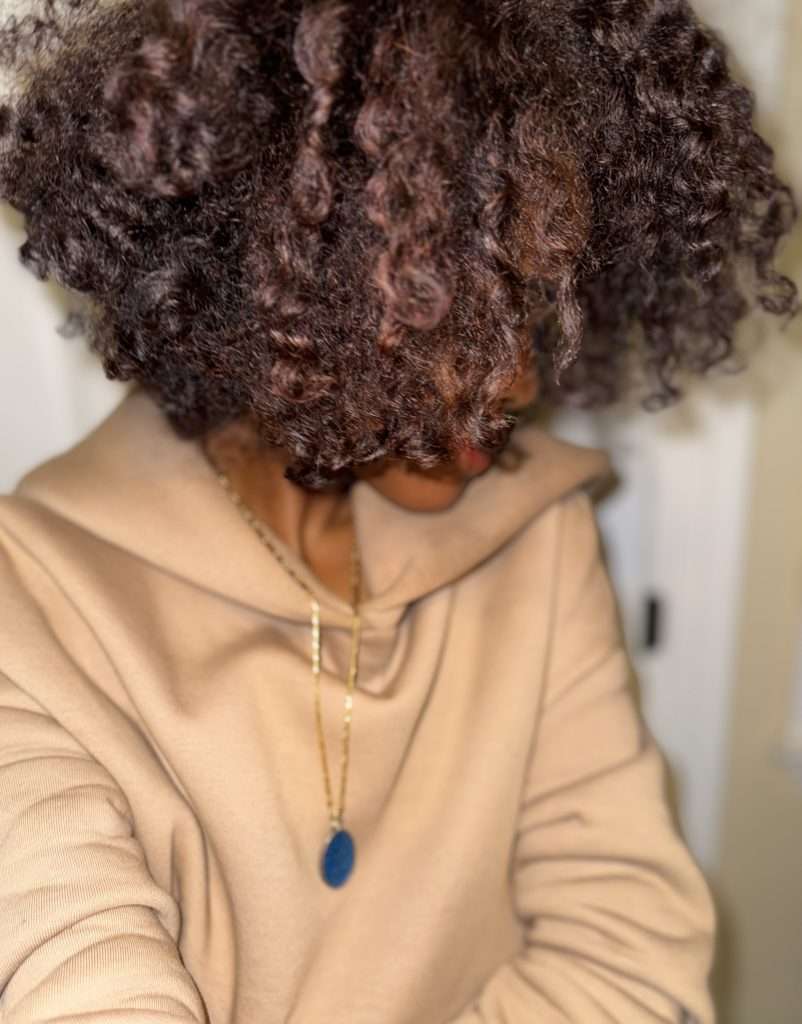
There are days when your curls need a little more than conditioner.
Maybe your ends feel rough.
Maybe your twist-out is giving tumbleweed.
Maybe your wash-and-go dried beautifully everywhere except the section in the back that apparently has its own plans.
That is where a simple DIY hair mask can come in.
A homemade natural hair mask is a conditioning treatment made with ingredients such as avocado, banana, honey, aloe vera, yogurt and coconut milk. These ingredients cannot permanently repair damaged hair or magically make follicles grow faster, but the right mixture can temporarily soften the hair, add lubrication, improve manageability and make curls feel smoother.
And the best part?
You may already have everything you need in your kitchen.
How Do You Make a Natural Hair Mask?
The basic formula is simple.
Choose:
-1 moisturizing base
Avocado, banana, yogurt or aloe vera gel
-1 ingredient for slip or softness
Honey, coconut milk or a small amount of oil
-Optional extras
Aloe vera, conditioner or another ingredient your hair already tolerates well
Blend the mixture until completely smooth, apply it to damp hair in sections, leave it on for about 15 to 30 minutes, then rinse thoroughly.
If you have very thick, long or dense hair, double the recipe.
And please blend bananas thoroughly.
Nobody wants to spend Sunday evening picking banana confetti out of a twist-out.
Best DIY Hair Masks at a Glance
| Hair concern | DIY mask |
|---|---|
| Very dry natural hair | Avocado + honey |
| Dry, frizzy curls | Banana + coconut milk |
| Hair that needs softness | Aloe vera + honey |
| Dry ends | Avocado + coconut milk |
| Dull curls | Honey + aloe vera |
| Hair that likes yogurt treatments | Greek yogurt + honey |
| Simplest recipe | Aloe vera + coconut oil |
1. Avocado and Honey Hair Mask for Dry Natural Hair
If your natural hair feels rough, dry or difficult to detangle, start here.
Avocado gives this mask a rich, creamy base. Honey acts as a humectant, meaning it attracts water, while the small amount of oil adds lubrication and helps the finished mixture spread more easily through curls and coils.
Ingredients
- 1 ripe avocado
- 1 tablespoon honey
- 1 tablespoon olive, avocado or coconut oil
- 1 to 2 tablespoons water as needed
How to Make It
Place everything in a blender and blend until completely smooth.
Do not simply mash the avocado with a fork if you can avoid it. Tiny pieces love curly hair and curly hair loves holding them hostage.
How to Use It
Apply to clean, damp hair in sections.
Concentrate on the lengths and ends.
Cover with a plastic cap and leave the mask on for 20 to 30 minutes.
Rinse thoroughly, then follow with your usual styling routine.
Best For
Dry curls, coils and ends that need extra softness.
2. Banana and Coconut Milk Hair Mask for Frizzy Curls
This was one of the original CurlyNikki favorites, and the combination still makes sense as a simple conditioning treatment.
Banana creates a creamy base while coconut milk adds richness and helps the mixture spread through the hair.
Ingredients
- 1 ripe banana
- 1/2 cup unsweetened coconut milk
- 1 teaspoon honey, optional
How to Make It
Blend until absolutely smooth.
Then blend it again.
I am serious about the banana.
If your blender leaves visible pieces, strain the mixture before putting it anywhere near your hair.
How to Use It
Apply to damp hair from roots to ends.
Let it sit for 15 to 20 minutes.
Rinse very thoroughly and shampoo afterward if your hair feels coated.
Best For
Dry curls and coils that need softness before styling.
3. Aloe Vera and Honey Hair Mask for Softness and Slip
If you want something lighter than avocado or banana, aloe vera makes a good base.
This is especially nice for curls that become weighed down easily.
Ingredients
- 1/4 cup pure aloe vera gel
- 1 tablespoon honey
- 1 tablespoon conditioner, optional
How to Make It
Mix the ingredients until evenly combined.
How to Use It
Apply to clean, damp hair in sections.
Leave on for 15 to 20 minutes.
Rinse thoroughly.
Best For
Curls that want softness without a very heavy treatment.
If your hair has never reacted well to aloe, skip this one. Homemade treatments are not automatically right for every head of hair.
4. Avocado and Coconut Milk Hair Mask for Very Dry Ends
Your entire head does not always need the same treatment.
Sometimes the real problem is the last few inches.
That is especially common with natural hair because the ends are the oldest part of the strand and have been through the most washing, styling, detangling and environmental exposure.
Ingredients
- 1/2 ripe avocado
- 1/4 cup coconut milk
- 1 teaspoon oil
How to Make It
Blend until smooth and creamy.
How to Use It
Apply mainly to the mid-lengths and ends.
Leave on for 20 minutes, then rinse.
Best For
Dry or rough-feeling ends.
And if your ends are visibly split, remember that no mask can permanently fuse a split end back together.
Sometimes the treatment is scissors.
I know.
I did not enjoy typing that either.
5. Greek Yogurt and Honey Hair Mask
Yogurt has been used in DIY hair treatments forever, including in the original version of this CurlyNikki article.
I would think of it as a conditioning treatment rather than assuming it behaves exactly like a formulated commercial protein treatment.
Food proteins are not automatically interchangeable with the hydrolyzed proteins used in hair products.
Ingredients
- 1/2 cup plain Greek yogurt
- 1 tablespoon honey
- 1 teaspoon olive or avocado oil, optional
How to Make It
Stir until smooth.
How to Use It
Apply to damp hair.
Leave it on for 10 to 20 minutes.
Rinse thoroughly.
If the hair feels coated afterward, cleanse lightly.
Best For
Hair that already responds well to yogurt-based DIY treatments.
If your hair feels stiff or rough afterward, do not keep using it just because the internet says you should.
Your hair gets a vote.
6. Aloe Vera and Coconut Oil Hair Mask
This is probably the easiest mask on the list.
It is also a good example of why you do not need 17 ingredients to condition natural hair.
Ingredients
- 1/4 cup aloe vera gel
- 1 teaspoon coconut oil
If coconut oil tends to make your hair feel hard or coated, use a different oil or skip it.
How to Make It
Mix thoroughly.
If the coconut oil is solid, warm it just enough to liquefy before combining.
Do not apply very hot oil to your scalp or hair.
How to Use It
Apply primarily to the lengths and ends.
Leave on for 15 to 20 minutes.
Rinse thoroughly.
Best For
A quick pre-shampoo or conditioning treatment.
7. Honey and Conditioner Moisture Mask
This one is technically cheating.
I am allowing it.
If you want a homemade treatment but do not want your kitchen looking like somebody opened a smoothie shop, start with a conditioner you already know your hair likes.
Then customize it.
Ingredients
- 1/2 cup moisturizing conditioner
- 1 tablespoon honey
- 1 teaspoon oil, optional
How to Make It
Mix everything together.
How to Use It
Apply to freshly washed hair.
Cover with a plastic cap.
Leave on according to the conditioner manufacturer’s directions, usually around 10 to 30 minutes.
Rinse.
Best For
Basically everyone who wants the DIY experience without having to rinse an avocado out of 4C hair.
This may actually be the most practical recipe on the page.
How to Apply a DIY Hair Mask to Natural Hair
The ingredients matter.
The application matters almost as much.
Start With Detangled Hair
You do not need every strand perfectly detangled, but applying thick mixtures to a giant knot is asking for unnecessary drama.
Work in manageable sections.
Apply to Damp Hair
Damp hair makes most masks easier to spread.
You generally do not need hair dripping wet unless the mixture is unusually thick.
Focus on the Lengths and Ends
Unless you are specifically using a scalp treatment, your lengths and ends are usually where conditioning matters most.
Cover the Hair
A plastic processing cap helps contain the mess and prevents the mask from drying out while you wait.
Rinse Thoroughly
This is especially important with food-based masks.
Avocado left behind in a curl is not additional nourishment.
It is lunch.
Style Normally
Once everything is rinsed out, continue with leave-in conditioner, gel, mousse or whatever your regular routine requires.
For product recommendations, see our Best Leave-In Conditioners for Curly Hair.
How Long Should You Leave a Homemade Hair Mask On?
For most of these recipes, 15 to 30 minutes is plenty.
Leaving a DIY mask on for three hours does not necessarily make it three times more effective.
And sleeping in a food-based hair mask is generally unnecessary.
Your hair does not need to marinate overnight.
Should You Use Heat With a DIY Hair Mask?
You can use gentle warmth if your hair responds well to it, but you do not need intense heat.
A plastic cap alone can trap some warmth from your head.
If you use a hooded dryer, keep the setting comfortable.
The goal is conditioning.
Not cooking.
How Often Should You Use a DIY Hair Mask?
There is no universal rule that every natural needs a mask once a week.
Your frequency depends on:
- how often you wash
- how dry your hair feels
- whether your hair is color-treated
- heat styling
- porosity
- product buildup
- what the rest of your routine looks like
Some people may enjoy a treatment weekly.
Others may only need one every few wash days.
Pay attention to how your hair behaves afterward.
If it is soft, flexible and easier to manage, great.
If it is coated, stiff or difficult to style, adjust.
Do Homemade Hair Masks Really Work?
They can work as temporary conditioning treatments.
That distinction matters.
A homemade mask may make your hair:
- feel softer
- feel smoother
- look shinier
- become easier to detangle
- feel more lubricated
- become easier to style
But a kitchen ingredient cannot permanently repair severely damaged hair, reverse split ends or guarantee faster follicle growth.
Healthy hair care is still mostly about the boring stuff:
cleaning the scalp and hair appropriately, conditioning, minimizing unnecessary damage, handling the hair gently and maintaining a routine you can actually stick to.
Not glamorous.
Very effective.
What Is the Best DIY Hair Mask for Dry Natural Hair?
For very dry natural hair, I would start with the avocado and honey mask.
It is rich enough for curls and coils without requiring ten ingredients.
For hair that becomes weighed down easily, try the lighter aloe vera and honey mask instead.
What Is the Best Homemade Hair Mask for 4C Hair?
There is not one special ingredient that 4C hair universally needs.
4C describes curl pattern, not porosity, density, strand thickness or damage level.
For 4C hair that feels very dry, try:
Avocado + honey
For lighter moisture:
Aloe vera + honey
For an easy treatment without food particles:
Conditioner + honey
If you are building a complete Type 4 routine, see our 4C Hair Guide.
What Is the Best DIY Hair Mask for Hair Growth?
This is where DIY hair advice can get very exaggerated.
A mask can help condition the hair you already have.
That may reduce tangling or breakage and help you retain more length over time.
But putting avocado, banana or honey on your strands has not been shown to suddenly make your follicles produce dramatically more hair.
If your goal is longer natural hair, focus on length retention too.
That means protecting your ends, avoiding unnecessary breakage and keeping your routine consistent.
Read How I Grew Long Natural Hair for more on that.
Should You Put Raw Food in Your Hair?
You can.
But there are a few practical rules.
Use fresh ingredients.
Do not use anything you are allergic or sensitive to.
Blend food-based masks thoroughly.
Rinse them out completely.
Do not leave perishable ingredients sitting on your hair for hours.
And if your scalp is irritated, inflamed or broken, skip the kitchen experiments and choose a simple formulated product instead.
Natural does not automatically mean irritation-proof.
Homemade Hair Mask vs. Store-Bought Deep Conditioner
DIY masks are fun and inexpensive.
Commercial deep conditioners have one big advantage:
they are actually formulated for hair.
A good deep conditioner may contain conditioning agents designed specifically to adhere to and soften the hair fiber.
So homemade is not automatically better.
Store-bought is not automatically better either.
Use what produces the best result on your hair.
If banana works beautifully for you, wonderful.
If your favorite conditioner works better in ten minutes and rinses clean immediately?
Also wonderful.
There is no prize for making wash day harder.
The Original CurlyNikki DIY Hair Masks
When this article was first published, Jascmeen Bush shared the three kitchen treatments she personally used on her natural hair.
Her philosophy was essentially:
mix it, apply it, and snack on the leftovers.
I still love that.
Her original favorites were:
Banana + Coconut Milk
A rich mixture she used when her hair needed conditioning and softness.
Avocado + Honey
Her moisturizing combination for dry hair.
Greek Yogurt + Strawberries
A food-based treatment she used while transitioning.
More than a decade later, I would simplify that third recipe and skip recommending strawberry as a necessary scalp treatment.
But the spirit of the original article remains:
Sometimes natural hair care can be simple.
You do not always need another $48 jar.
Sometimes you just need to understand what your hair is asking for.
CurlyNikki Says
My favorite thing about the original version of this article is that Jascmeen was not trying to make natural hair care complicated.
Banana.
Coconut milk.
Avocado.
Honey.
Whatever was left became lunch.
That energy still works.
But in 2026, I would add one rule:
Your hair does not need every ingredient that has ever existed on Pinterest.
Start simple.
Try one recipe.
Notice how your hair feels.
Keep what works.
Leave what does not.
And if the $8 conditioner sitting in your shower beats the organic avocado?
Baby, eat the avocado.
Your hair will be fine.
Originally written by Jascmeen Bush for CurlyNikki.com. Updated August 2026 by Team CurlyNikki with expanded recipes, measurements, application instructions and current natural-hair care guidance.
DIY Hair Mask for Natural Hair FAQ
How do you make a natural hair mask at home?
Choose a moisturizing base such as avocado, banana, aloe vera or yogurt. Combine it with an ingredient such as honey, coconut milk or a small amount of oil. Blend thoroughly, apply to damp hair for approximately 15 to 30 minutes and rinse well.
What is the easiest homemade hair mask?
Mix 1/4 cup aloe vera gel with 1 teaspoon of oil, or mix honey into a conditioner you already own.
Which homemade hair mask is best for dry hair?
An avocado and honey mask is a good starting point for very dry curls and coils.
Can I leave a DIY hair mask on overnight?
Usually there is no need. Most conditioning benefits can be achieved in a much shorter period, and food-based ingredients are better rinsed out promptly.
Can a homemade hair mask repair damaged hair?
It may temporarily improve softness, lubrication and appearance, but it cannot permanently reverse severe structural damage or mend split ends.
Can a homemade hair mask make my hair grow?
A conditioning treatment can support length retention by making the hair easier to handle and potentially reducing breakage, but it should not be marketed as a guaranteed follicle-growth treatment.
Can I use a hair mask every week?
Possibly. Some hair does well with weekly conditioning treatments, while other hair may need them less often. Let your hair’s response determine frequency.
Should I shampoo before or after a homemade hair mask?
It depends on the ingredients. For most masks on this page, starting with clean or freshly shampooed hair works well. If you use a very oily or food-heavy treatment, you may prefer to use it before shampooing.
Is avocado good for curly hair?
Avocado can make a useful creamy base for a DIY conditioning mask, particularly when combined with ingredients that improve spreadability.
Is honey good for natural hair?
Honey is a humectant and is commonly used in conditioning treatments. Because it is sticky, it is usually easiest to dilute or mix it into another ingredient rather than applying it directly.
Is coconut oil good for all natural hair?
No. Some people love coconut oil and others find that it leaves their hair feeling stiff, dry or coated. It is optional in every recipe on this page.
What should I do if food gets stuck in my hair?
Rinse with plenty of water and conditioner for slip. Next time, blend the ingredients more thoroughly or strain the mixture before application.