
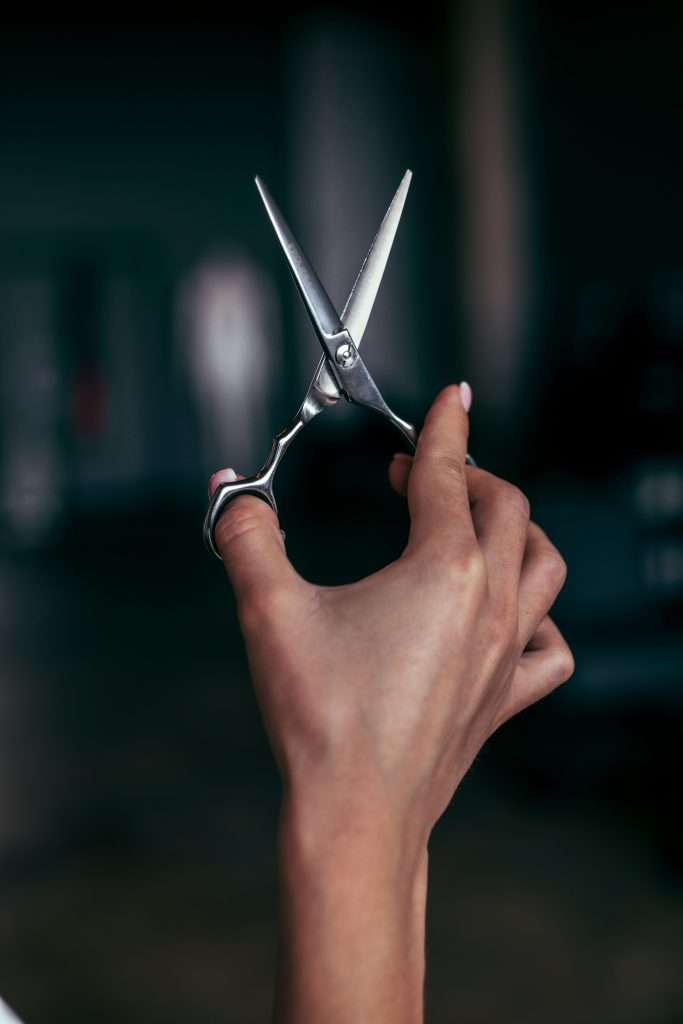
6 Best Hair-Cutting Shears for Trimming Natural Hair in 2026
The quickest way to turn a careful trim into frayed ends is to reach for the scissors from the junk drawer. Hair shears are sharper, better balanced, and designed to close cleanly through a strand rather than pinch and bend it. That matters when every millimeter of length has been patiently moisturized, protected, and minded like family business.
For at-home dusting and curl-by-curl trims, a compact 5.5- to 5.75-inch blade gives useful control. The handle should sit comfortably without forcing the wrist open, and the tension should let the blades move smoothly without wobbling. These six picks cover beginners, left-handed cutters, and people ready to invest in a more advanced edge.
| Award | Product | Best for | Key features | Size | Approx. price |
|---|---|---|---|---|---|
| Best overall | Fromm Explore Hair Cutting Shear | Home trims and advancing skill | Ice-tempered Japanese steel, beveled smooth blade, semi-offset handle | 5.75 in | $37.49 |
| Best budget | Tweezerman Spirit 2000 Styling Shears | Search-and-destroy trims | Micro-serrated stainless-steel blades, large finger loops | 5.5 in | $31 |
| Best smooth blade | Tweezerman Stainless 2000 Shears | Blunt trimming | Ice-tempered stainless steel, smooth cutting action | 5.5 in | $32 |
| Best left-handed | Fromm Transform Left-Handed Hair Shear | Left-handed trimming | True left-handed design, Japanese steel, semi-offset handle | 5.75 in | $59.99 |
| Best ergonomic midrange | Cricket Shear Xpressions Voo Do Shear | Longer trimming sessions | Japanese stainless steel, offset handle, removable finger rings | 5.75 in | $45.95 |
| Best pro investment | Fromm Dare 1 Piece Hair Cutting Shear | Advanced point and slide cutting | Semi-convex hand-honed edge, craned handle, adjustable tension | 5.75 in | $129.99 |
1. Fromm Explore 5.75-Inch Hair Cutting Shear
Fromm Explore balances price and real tool specifications better than anything else here. The 5.75-inch shear uses ice-tempered Japanese steel, a long-lasting beveled blade with a smooth edge, and a semi-offset handle that keeps the hand in a more relaxed position.
It is approachable enough for careful home trims but not so basic that technique immediately outgrows it. The blade is intended for wet or dry cutting, which works for blown-out trims and curl-by-curl maintenance. It is not a high-end convex shear for sliding through large sections, and that restraint is helpful for most nonprofessionals.
2. Tweezerman Spirit 2000 Styling Shears
The Spirit 2000 uses micro-serrations that grip hair as the blades close. That feature helps prevent a small section from sliding away during a search-and-destroy trim. Large finger loops make the handle accessible, and the $31 price is reasonable for a dedicated home tool.
Micro-serrations are less suited to advanced slide cutting, which is not where a beginner should be experimenting anyway. Use these for tiny dusting snips, bangs, and basic maintenance.
3. Tweezerman Stainless 2000 Shears
The Stainless 2000 swaps micro-serrations for a smooth, razor-sharp cutting action. The 5.5-inch blade is compact and the rounded loops offer solid control for a blunt trim or the ends of twists.
Choose this over the Spirit when a clean smooth blade matters more than extra grip. Because it is sharper and less resistant, section size and hand placement need more attention. Tweezerman offers sharpening service details on its site, a practical advantage for a tool meant to last.
4. Fromm Transform 5.75-Inch Left-Handed Hair Shear
A right-handed shear turned around is not a left-handed shear. The blade orientation and handle still work against the natural motion of the hand. Fromm’s Transform offers a true left-handed 5.75-inch option with Japanese steel, a smooth beveled edge, and a semi-offset handle.
At $59.99, it costs more than the entry-level choices, but correct orientation improves visibility and control. That is money spent on function, not a lefty label applied after the fact.
5. Cricket Shear Xpressions Voo Do 5.75-Inch Shear
Cricket’s offset handle, removable finger rings, and finger rest allow more fit adjustment than basic plastic-loop shears. Japanese stainless steel and a reusable case round out a midrange tool that feels considered without crossing into triple digits.
The glossy black finish is attractive, but the useful part is comfort over a longer trim. This is still a right-handed shear. Left-handed shoppers should choose a properly oriented option instead of tolerating wrist strain for the aesthetic.
6. Fromm Dare 5.75-Inch 1 Piece Hair Cutting Shear
Fromm Dare steps into professional territory with a semi-convex, hand-honed edge, one-piece construction, adjustable tension, and an offset craned handle. The brand positions it for advanced point and slide cutting.
The $129.99 price only makes sense if trimming is frequent and technique is confident. A sharper, smoother shear does not make an inexperienced cut safer. It simply responds more directly to the hand holding it.
How to choose and care for hair shears
A 5.5-inch shear favors detailed curl-by-curl work, while 5.75 inches offers a little more efficiency without feeling oversized. Micro-serrated blades provide control for beginners. Smooth beveled blades make crisp lines, and semi-convex or convex edges support more fluid professional techniques.
Keep the shears dry, wipe away hair after each session, and follow the manufacturer’s cleaning and oiling directions. Store them closed in a case. If the blades fold hair, push strands away, or require extra force, stop cutting and arrange professional sharpening. Do not attempt to sharpen salon shears with a kitchen sharpener.
Frequently asked questions
Can regular scissors cause split ends?
Dull household scissors can crush or bend the strand instead of making a clean cut, leaving a rough end that may fray sooner.
Should natural hair be trimmed wet or dry?
Either can work. A dry curl-by-curl trim shows the hair’s worn shape and shrinkage, while a stretched or wet trim can make even sectioning easier. Choose the method that matches the desired result.
Are thinning shears good for 4C hair?
They can remove density unpredictably and create shorter pieces that increase tangling. They are a specialist tool, not a substitute for standard cutting shears.
How often should shears be sharpened?
Frequency depends on use and blade type. Sharpen when performance changes, and use a service experienced with hair shears.
Read More
- Hair Dusting for Natural Hair: Trim Split Ends Without Losing Length
- How to Trim Split Ends Without Losing Too Much Length
- How to Give Yourself a Deva Cut
- How to Trim Your Own Hair
- How to Prevent Split Ends and Breakage in Natural Hair