The Definitive Guide to Burmese Curly Hair in 2025
Where to Buy It and How to Style It!
by Team CurlyNikki
Burmese Curly Hair: The Complete Guide to Human Hair, Crochet Styles, Bundles & Maintenance
There are hair textures that trend because they photograph beautifully, and then there are textures that become popular because they solve a very specific Black-hair problem. Burmese curly is starting to look like both.
The appeal is easy to understand. The curl is loose enough to give you movement and separation, but textured enough that it does not immediately look like silky extensions sitting on top of natural hair. Depending on the brand and installation, it can work for crochet styles, boho braids, knotless braids, curly sew-ins, loc accents and those full, slightly undone protective styles that look better once they stop looking freshly installed.
And unlike synthetic curly hair, human-hair versions can usually be washed, conditioned, refreshed and reused if the quality is good and you take care of them properly.
That last part matters, because “Burmese curly” is also becoming one of those beauty terms that gets slapped onto a lot of very different hair. Before you spend a few hundred dollars because somebody’s install looked incredible on TikTok, here is what you actually need to know.
What Is Burmese Curly Hair?
In today’s extension market, Burmese curly generally refers to a loose-to-medium curly human-hair texture with visible spirals, body and a more natural-looking finish than very silky curl patterns. You will see it sold as traditional wefted bundles, bulk human hair for braiding and crochet, and increasingly as pre-separated or knot-friendly hair designed for crochet installs.
One important distinction: the phrase “Burmese curly” does not automatically guarantee that the hair was collected in Myanmar, formerly known as Burma. In the extension industry, origin names are often also used as texture and marketing categories, and provenance can vary considerably between sellers.
That does not mean the texture itself is not worth buying. It means I would pay more attention to the actual construction, fiber quality, weight, reviews and return policy than to an exotic-sounding origin story.
If a company claims the hair is truly Burmese, virgin, single-donor or completely unprocessed, those are separate quality claims that should be supported by the seller.
Why Burmese Curly Hair Is Suddenly Everywhere
The current Burmese curly boom is closely connected to the way Black women are wearing protective styles right now.
We want braids, but softer.
Crochet, but less crochet-looking.
Boho hair that actually behaves like hair.
Protective styles with movement instead of 12 pounds of extensions hanging from our scalps.
Burmese curly fits beautifully into that shift. Current human-hair versions are being marketed specifically for boho braids, knotless crochet styles, miracle-knot installs and soft curly protective styles. OQ Hair, for example, currently sells its Burmese curly bulk human hair in 14- to 26-inch lengths and 50-gram bundles, with three-, four- and five-bundle options for fuller installs.
The result is less “perfect curl from root to end” and more of that slightly wild, expensive-looking texture that moves when you move.
Which, frankly, is usually what we were trying to achieve with three different packs of synthetic hair anyway.
Burmese Curly Crochet Hair vs. Burmese Curly Bundles
This distinction will save you money.
Burmese Curly Crochet Human Hair
Crochet or bulk Burmese curly hair is sold without a traditional sewn weft. The hair can be individually installed through a braided foundation, tied using knotting methods or incorporated into braids and other styles.
This is the format you want if you are interested in:
- crochet installs
- miracle knots
- boho braids
- knotless braids with curly pieces
- loc accents
- individual curly extensions
- adding fullness selectively rather than sewing in a full weft
Current Burmese curly crochet hair is often sold in relatively small 50-gram bundles, which gives you more control over how much hair you use.
Burmese Curly Bundles
Traditional bundles are usually wefted hair intended for sew-ins, wig construction or other installations where the track is secured rather than individually crocheted into the hair.
They make more sense if your goal is a classic curly sew-in, U-part wig, half wig or custom unit.
A bundle can look very similar to bulk Burmese curly hair once installed, but the construction determines what styles you can actually create with it.
Do not order three beautiful bundles and then discover your braider asked you to bring bulk hair.
We have all spent enough money learning beauty vocabulary the hard way.
What Does Burmese Curly Hair Look Like?
There is no single standardized Burmese curl pattern across the industry.
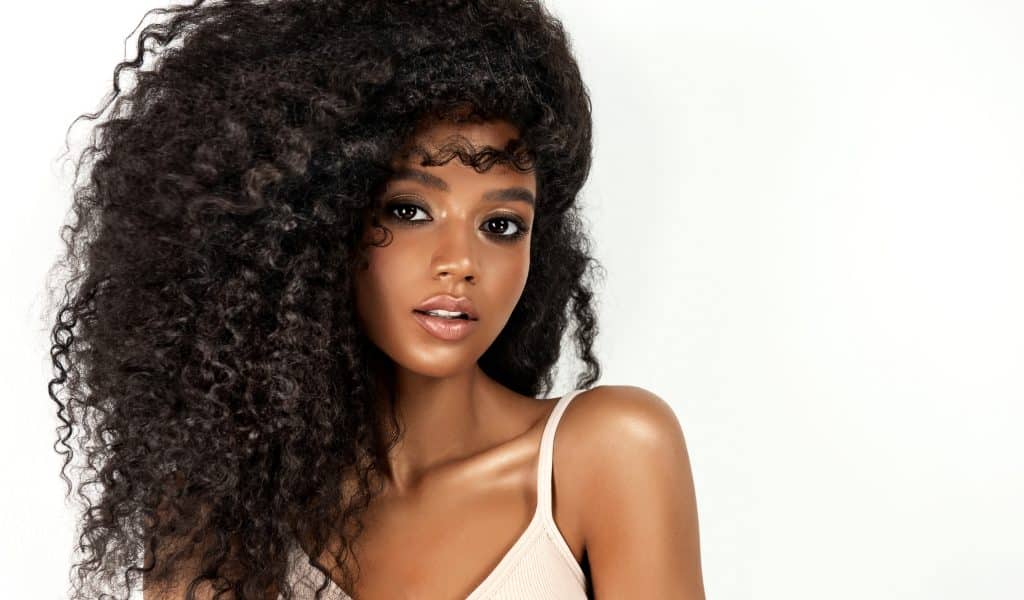
Some versions resemble a loose 3B-ish spiral. Others are tighter, fluffier or more elongated. Some brands sell the texture with very uniform curls, while others deliberately create a less polished pattern so the finished style looks more believable.
The curl also changes depending on how you manipulate it. Fresh from the package, human hair may look highly defined. Once washed, conditioned, separated and worn for a few days, it can become fuller and softer.
That is often when it looks best.
For Black women wearing it alongside natural leave-out, braids or locs, I would usually choose a texture based on how it looks after being fluffed, not how perfectly defined it appears in the product photo.
Is Burmese Curly Hair Good for Natural Hair?
It can be excellent for natural hair because it gives you texture without requiring your own hair to imitate the extension.
That is a much bigger deal than it sounds.
One of the reasons some extension styles become difficult to maintain is that the added hair is so silky that your roots, edges or leave-out constantly need to be manipulated to make the two textures agree. A curlier extension can create a more forgiving visual blend, particularly in braided and crochet styles where your actual hair is mostly tucked away.
It is especially attractive for 3C, 4A, 4B and 4C naturals who want movement but do not necessarily want bone-straight extensions or a super-polished curl.
The goal is not always an exact curl-pattern match. Sometimes you just want the finished style to look like it belongs on the same head.
Is Burmese Curly Hair Good for 4C Hair?
Yes, particularly for protective styles.
Your 4C hair does not need to have the same curl diameter as the extension for the style to work. In crochet, braids and most tucked-away styles, the goal is compatibility in overall texture, volume and finish rather than a strand-for-strand curl match.
For leave-out styles, you will need to think more carefully. If your own hair is exposed, you may have to twist, braid, rod-set or otherwise style it to blend with the extension. Repeatedly heat-styling 4C leave-out just to match a looser extension texture can defeat the point of choosing a protective style in the first place.
If your hair will be exposed, choose the install with your real Tuesday-morning routine in mind, not just the reveal video.
Burmese Curly Hair for Crochet Styles
This is probably the format driving the most excitement right now.
Human-hair crochet has improved enormously from the old idea of installing one giant synthetic curl pattern over cornrows and hoping the roots stay hidden. Modern knotting techniques allow stylists to place smaller pieces of hair more strategically, resulting in an install that can look surprisingly close to individual curls growing from the scalp.
Burmese curly works particularly well because the texture has enough body to disguise the foundation while still moving naturally.
The downside is that human hair requires more maintenance than synthetic crochet hair. It can tangle. It can shed. It can dry out. It can become matted if you sleep on it loose for two weeks and then become personally offended when it objects.
Human hair behaves more like hair because it is hair.
That is both the selling point and the responsibility.
What Are Miracle Knots?
“Miracle knots” is a name you will see frequently around Burmese curly crochet hair.
It generally refers to an installation technique designed to create very small, discreet attachment points so the hair appears to come directly from the scalp rather than showing bulky crochet knots. Some brands now actively market Burmese curly human hair specifically for reusable miracle-knot or knotless crochet installations.
The precise method varies by stylist, so do not assume every person advertising miracle knots is using exactly the same technique.
What matters from the client side is that the knots should be secure without creating excessive tension, and your foundation should not hurt.
A protective style that begins with “it will loosen in four days” is already giving you information.
Burmese Curly Hair for Boho Braids
This may be my favorite use for it.
Human-hair curls can elevate boho braids because the loose pieces remain softer, move more naturally and can be refreshed more successfully than many synthetic curls.
The challenge with boho braids has always been that the curly pieces are the prettiest part on day one and sometimes the most chaotic part by week three. Human hair does not eliminate tangling, but quality human hair gives you more options when the curls need help. You can wet them, condition them, detangle gently and restyle them.
OQ Hair currently markets its Burmese curly bulk human hair for boho braids as well as loose curly styles, which tells you how closely these two trends are overlapping now.
For a boho install, ask your braider exactly how much curly hair she typically uses. You may need significantly less Burmese curly hair than you would for a full crochet style because the curls are accents rather than the entire installation.
How Much Burmese Curly Hair Do You Need?
This depends heavily on the format, length, density and look you want.
For current 50-gram bulk human-hair products, sellers commonly offer three-, four- and five-bundle configurations for a full look. OQ Hair, for example, sells one 50-gram bundle individually as well as sets of three, four or five.
As a rough buying framework:
| Style | Starting Point |
|---|---|
| Light boho-braid accents | 1 to 2 small bundles |
| Medium boho or knotless accenting | 2 to 3 bundles |
| Natural-density crochet install | 3 to 4 50g bundles |
| Very full crochet install | 4 to 5+ 50g bundles |
| Traditional sew-in | Depends on standard bundle weight and length |
Longer hair often requires more total weight because the individual strands are longer, and the fuller you want the finished style, the more hair you will need.
I would rather buy one extra bundle from a retailer with a reasonable return policy than discover halfway through the install that the left side of my head has entered a recession.
Does Burmese Curly Hair Tangle?
It can.
Any curly human hair can tangle because the strands are constantly interacting with one another, and the curlier and longer the hair is, the more opportunity those strands have to wrap together.
Quality matters enormously here.
Even within the same product category, customer experiences can differ. One current review of a reddish-brown Burmese curly product from OQ Hair, for example, specifically mentions tangling and knots despite otherwise finding the hair decent.
That is why “100 percent human hair” is not enough information by itself.
Look for reviews specifically discussing:
- matting after several weeks
- shedding
- whether the curls return after washing
- how the ends hold up
- whether the hair can be reused
- tangling at the nape
- smell or coating out of the package
- how it behaves after actual wear rather than only installation day
Curly hair that looks spectacular for 20 minutes under a ring light has not passed the test yet.
Does Burmese Curly Hair Shed?
Some shedding is normal with extension hair, especially bulk hair that has been cut, separated or tied into individual knots.
Excessive shedding is not.
You can reduce unnecessary shedding by handling the hair gently, avoiding aggressive brushing, detangling from the ends upward and not constantly separating curls when they do not need to be separated.
With crochet hair, the installation technique also matters. If hair is repeatedly pulled, cut or manipulated at the attachment point, shedding can increase.
How to Maintain Burmese Curly Hair
Burmese curly does not need a 12-product routine, but it does need some care if you want it to keep looking like hair rather than slowly becoming one large dreadlock.
Detangle Before It Becomes a Problem
Use your fingers to separate obvious tangles regularly. For more thorough detangling, lightly dampen the hair and work in sections from the ends upward.
Do not wait until the entire nape has formed an alliance.
Use Lightweight Moisture
A small amount of leave-in conditioner or curl refresher can help restore softness, but heavy creams and oils may create buildup quickly on extension hair.
Remember that the extension is not growing from your scalp and does not receive sebum from it the way your natural hair does.
Wash When Necessary
Human hair can be washed.
For a crochet installation, cleanse the scalp carefully and allow the shampoo to move through the extension hair rather than aggressively piling everything together. Rinse thoroughly.
If you are wearing loose bundles or a wig, washing is simpler because you can work through the lengths more freely.
Condition the Hair
After cleansing, use conditioner through the extension lengths and detangle gently.
Do not glob conditioner onto the attachment points of a crochet installation if doing so will compromise the knots.
Let It Dry Completely
Wet human hair trapped near braided natural hair can create an unpleasant environment very quickly.
Give the installation enough time to dry thoroughly, particularly around the roots and foundation.
How to Refresh Burmese Curly Hair
The beauty of human hair is that you can usually bring the curl back.
Start with water.
Lightly mist the hair and use your fingers to encourage the curl pattern. If the hair needs more help, add a small amount of leave-in or curl product and smooth it through individual sections.
For pieces that have completely lost shape, finger-coiling can help.
Avoid adding product every single morning without ever washing the hair. Eventually you are no longer refreshing curls. You are building a layer cake.
How to Sleep With Burmese Curly Hair
Night care is where you either extend the life of the style or spend the following morning performing emergency surgery.
Loosely gather long hair into one or several sections and cover it with a large satin bonnet or scarf. If the hair is extremely long, loosely twisting or braiding it can reduce friction and tangling while you sleep.
A satin pillowcase gives you another layer of protection, especially if you routinely wake up with your bonnet somewhere near the foot of the bed.
The nape deserves particular attention because that is where collars, pillows and movement create the most friction.
Can You Reuse Burmese Curly Crochet Hair?
Potentially, yes.
One of the biggest advantages of buying quality human-hair crochet extensions is the possibility of reusing them after removal. Some current products are specifically marketed as reusable.
Whether reuse is realistic depends on the quality of the hair, how it was installed, how carefully it is removed and what condition it is in afterward.
If you plan to reuse it, do not let the takedown become the moment when everybody stops caring.
Remove the hair gently, keep the strands organized, wash and condition them, let them dry completely and store them neatly.
If you paid human-hair money, treat it like human-hair money.
How Long Does Burmese Curly Hair Last?
There are two different questions here.
The hair itself may last through multiple installs if it is high quality and maintained well.
The protective style should not automatically remain installed simply because the extension hair still looks good.
Your natural hair and scalp determine how long an installation can reasonably stay in. New growth, matting at the roots, scalp buildup and tension all matter.
Extension hair is replaceable.
Edges are much more inconvenient.
How to Buy Good Burmese Curly Hair
This is where I would slow down before hitting “add to cart.”
Look at Weight, Not Just Number of Bundles
Three bundles means very little if each bundle contains a different amount of hair.
A current OQ Burmese curly crochet bundle, for example, is listed at 50 grams.
Compare total grams when comparing prices.
Read the Bad Reviews
Five-star reviews tell you people are happy.
Three-star reviews tell you why you might not be.
Look for repeated mentions of matting, thinning ends, unusual shedding, chemical smell or curls that never return after washing.
Check the Return Policy Before Opening Everything
Hair often has stricter hygiene-related return rules than ordinary beauty products.
Know the rules before you separate, wash or install it.
Be Skeptical of Absolute Quality Claims
“Virgin,” “raw,” “unprocessed,” “single donor” and geographic-origin terms are used liberally throughout the extension market.
Buy based on the seller’s track record and the hair’s actual performance, not just increasingly luxurious adjectives.
Burmese Curly Hair Options to Know
OQ Hair Burmese Curly Crochet Human Hair
OQ currently sells Burmese curly bulk human hair in lengths from 14 to 26 inches and lists each individual bundle at 50 grams. The company offers three-, four- and five-bundle configurations and markets the hair for boho braids and soft curly protective styles.
The same texture is available in several color variations, including reddish brown and chocolate brown, which is useful for women who want dimension without coloring the extensions themselves.
Burmese Curly Hair for Miracle-Knot Crochet
If your goal is the seamless individual-curl look currently circulating online, look specifically for bulk human hair intended for knotless crochet or miracle-knot installation rather than traditional sewn bundles.
The distinction affects both the installation method and the amount of hair you need.
Traditional Burmese Curly Bundles
For sew-ins and custom wigs, traditional wefted Burmese curly bundles are still the more practical choice.
When buying bundles, compare total weight, weft construction, available lengths and whether the seller provides realistic post-wash imagery. A beautiful curl fresh from the package is much less interesting to me than what it looks like after shampoo number three.
Burmese Curly vs. Deep Wave Hair
These terms overlap, but they are not necessarily interchangeable.
Deep wave usually describes a relatively consistent wave or curl pattern with repeated S-shaped movement. Burmese curly is often sold with more visible spiral formation and a slightly less uniform, more textured finish.
That irregularity is part of why Burmese curly can look particularly believable in boho and crochet styles.
If your goal is a sleek, highly uniform sew-in, deep wave may appeal more.
If your goal is soft, touchable, slightly undone curls, Burmese curly may be the better fit.
Burmese Curly vs. Water Wave Hair
Water wave tends to have a looser, flowing wave pattern.
Burmese curly generally has more curl and volume.
For boho braids, either can work. Water wave creates a softer, looser finish while Burmese curly can give the style more texture and fullness.
For crochet, Burmese curly may offer more coverage because of the curl’s volume.
Is Burmese Curly Hair Worth the Money?
It can be, especially if you are replacing synthetic hair with human hair because you want movement, longevity and the ability to refresh or reuse your extensions.
But I would not buy Burmese curly merely because the name is trending.
Buy it if the texture suits the style you want.
Buy it if the construction suits the installation.
Buy it if the reviews show that the hair behaves well after several weeks.
And buy it from somewhere you trust.
The difference between a beautiful human-hair crochet install and $300 worth of matting attached to your head is often not visible on day one.
Read More: Ensure that your style is protective, NOT destructive!
FAQ’s About Burmese Curly Hair Bundles
Is Burmese curly hair human hair?
Burmese curly is sold in both human-hair and potentially synthetic or blended formats depending on the retailer. Verify the fiber content before purchasing rather than assuming the texture name guarantees human hair.
Is Burmese curly hair good for crochet?
Yes. Bulk Burmese curly human hair is increasingly sold specifically for crochet and knotless or miracle-knot installations.
How many bundles of Burmese curly crochet hair do I need?
For 50-gram bundles, roughly three to five bundles may be used for a full crochet installation depending on length and desired density. Boho-braid accents may require considerably less.
How do I source Burmese curly hair ethically?
Look for vendors who prioritize fair trade practices, transparency, and ethical sourcing. Ask whether the hair is collected voluntarily and confirm the company’s efforts to support the communities from which the hair originates.
Can you use Burmese curly hair for boho braids?
Yes. Human-hair Burmese curly is currently marketed specifically for boho braids because the curl pieces can be washed, refreshed and restyled more easily than many synthetic alternatives.
Does Burmese curly hair tangle?
It can. Curly human hair naturally has more opportunities to tangle than straight hair. Quality, length, nighttime care, product buildup and detangling habits all affect how badly it tangles.
Can you reuse Burmese curly crochet hair?
Quality human-hair versions may be reusable if they are removed carefully, washed, conditioned and stored properly. Some current Burmese curly crochet products are specifically marketed as reusable.
How do you keep Burmese curly hair from matting?
Detangle before knots become severe, keep the hair protected at night, use lightweight products, avoid excessive manipulation and pay particular attention to the nape.
How should I maintain Burmese curly hair at night?
To prevent frizz and tangling:
1. Sleep with a satin or silk bonnet or scarf.
2. Use a silk pillowcase if you prefer sleeping without headgear.
3. Gently twist or braid the hair before bed to preserve the curl pattern.
How do I safely remove Burmese curly hair extensions?
To take down your extensions:
1. Gently detangle the curls first to avoid knots.
2. Use a detangling spray or conditioner to loosen glue or knots if any exist.
3. Work slowly to avoid pulling or breaking your natural hair.
How do I care for my natural hair after removing extensions?
Once the extensions are removed:
1. Wash your hair thoroughly to remove buildup.
2. Deep condition to restore moisture and elasticity.
3. Trim any split ends if necessary, and give your hair a break from additional styling for a while.
Can wearing Burmese curly hair as a protective style promote growth?
Yes, if done correctly! By reducing manipulation and allowing your natural hair to rest, Burmese curly hair can support length retention and overall hair health. Just ensure your scalp stays moisturized and clean beneath your install.
How versatile is Burmese curly hair for styling?
Burmese curly hair is extremely versatile! You can define its natural curls using curl creams or mousse, straighten it with heat tools for a sleek look, or even dye it if it’s 100% unprocessed. Always use heat protectant to prevent damage when styling.
What products work best for Burmese curly hair?
To keep your hair looking its best, use:
1. Sulfate-free shampoo and conditioner to maintain moisture.
2. Lightweight leave-in conditioners to define curls without weighing them down.
3. Curl-defining creams, mousses, or gels for styling.
4. Argan or coconut oil for added shine and softness.
Can 4C hair wear Burmese curly extensions?
Absolutely. Burmese curly works particularly well for 4C protective styles because your natural hair can remain braided or tucked away while the extensions provide the visible curl and volume.
With proper care and attention, Burmese curly hair can help you achieve stunning styles while protecting the health of your natural hair!
I understand exactly why Black women are loving this texture.
We have reached the stage of protective styling where we still want the protection, but we do not necessarily want the hair to look like it came out of the package five minutes ago.
We want movement. We want softness. We want curls that can get a little bigger on day four and somehow look better because of it.
Burmese curly does that beautifully when the hair is good.
But “human hair” is not a magic phrase, and “Burmese” is not a quality guarantee. Buy the construction you need, compare the actual weight, read the reviews nobody screenshots for Instagram and ask your stylist exactly what she wants before ordering.
Then take care of it like hair.
Because the very thing that makes good Burmese curly extensions so gorgeous is also what makes them require a little respect:
They are supposed to behave like real hair.
And real curly hair has always had opinions.